


Athens Excursions » Daphni Monastery
More about Athens & Attica
AthensAncient Athens
Ancient Agora
Museums
Walks in Athens
Plaka
Syntagma area
Lycabettus
Entertainment
Nightlife
Shopping
Excursions
Athenian Riviera
Mount Parnitha
Kaisariani Monastery
Daphni Monastery
Marathon
Piraeus
Porto Germeno (Aegosthena)
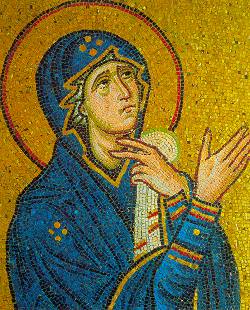
Daphni Monastery beautifully combines the ancient myths, the Classical period and the Byzantine history of the city. The monastery ts considered to be the most important Byzantine monument in the vicinity of Athens and its mosaics are thought to be magterpieces of the golden era of Byzantine art.
Built on a hallowed ground - In the 2nd century AD the traveller Pausanias refers to the temple of Daphnios or Daphnaeos Apollo, which stood by the ancient Sacred Road that led from Athens to Eleusis. The Goths demolished that temple in AD 395. When the Byzantine Emperors forbade the ancient pagan religion, the Christians occupied the site and built a church using the old temple's material. They chose this particular site because it stood on the route to Eleusis, where the believers in idols continued to go to celebrate the Eleusinian Mysteries. In AD 1100 a new church was built in the shape of an octagon. Up until the 19th century the monastery underwent several alterations. During the 1821 Greek Revolution it became a shelter for the Greek fighters.
The myths - The monastery is situated on the site where in ancient times stood the temple of Daphnaeos or Daphnios Apollo with a sacred laurel grove. According to one version the place owes its name to this ancient temple and its laurel grove (daphne: laurel). Another version claims that Daphni was named after the ancient Queen, Daphne, whose ship was wrecked near the bay of Eleusis. Queen Daphne was saved and expressed her gratitude to Apollo by building this temple, which was destroyed by the Goths in AD 395. Yet another myth says that this was the place where the nymph Daphne, fleeing the unwelcome attentions of the god Apollo, had turned herself into a laurel tree.
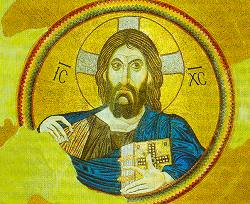
The mosaics - Daphni owes part of its fame to its unique and beautiful mosaics, which were made in the 11th century AD. You can see them on the walls, the dome, the arms of the cross on the roof and in the sanctuary. Seventy six of the themes of the mosaics refer to the life of Christ and the Virgin Mary. You will also see mosaics of figures of saints and prophets.
Christ Pantocrator - The central figure of the dome is Christ Pantocrator, inside a circle that symbolises the sky. The gold background symbolises Heaven. His face is severe as he watches the humans on earth and judges their acts. He is surrounded by Old Testament prophets.
The Assumption of Virgin Mary - This mosaic stands half-damaged on the western wall of the church. Notice especially the angel that comes down from the sky to receive the Virgin's soul. He is thoughtful and his hands are piously covered by a cloth.
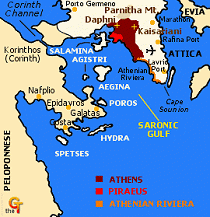
Getting there - Daphni Monastery is 11 Km along the National Road (Athens to Corinth).
More about Athens & Attica
Walks in Athens » Plaka • Syntagma area • Lycabettus
Entertainment » Nightlife • Shopping
Excursions » Athenian Riviera • Mount Parnitha • Kaisariani Monastery • Daphni Monastery • Marathon • Piraeus • Porto Germeno (Aegosthena)

The travel guide to Greece


Contact: contact@thegreektravel.com Last update 26 April 2019